Articles Posted in Nursing Home

A hospital stay that ends in a transfer to a skilled nursing facility puts most families in contact with Medicare’s rehabilitation benefit for the first time. The coverage is genuine but narrow, and it rests on conditions decided during the hospital stay rather than at the nursing home. By the time someone is told coverage is ending, the facts that decided it are already fixed.

Medicare nursing home coverage in Texas runs under Part A as what the statute calls post-hospital extended care services, and two limits account for most of the denials families encounter. The stay has to follow a qualifying hospital admission, and the benefit is capped at 100 days per spell of illness under 42 U.S.C. § 1395d(a)(2)(A). Neither limit is within the facility’s discretion. McCulloch & Miller works with families in Austin, Houston, and across Texas on Texas elder law questions that begin at exactly this moment.

What Medicare Nursing Home Coverage in Texas Pays For

Post-hospital extended care services are skilled nursing or rehabilitation services furnished in a skilled nursing facility after a qualifying transfer from a hospital, covered by Medicare Part A for a limited number of days rather than as ongoing long-term care.


Continue reading

5.23.18People moving into an assisted living facility, should do a lot of research to make sure they get the quality care and the services they need. Their lives may depend on it.

Life in an assisted living facility is a welcome alternative to aging seniors who are no longer able to remain in their own homes, but don’t want or need to live in a nursing home, which often feels like living in a hospital. They can receive the services they need, while enjoying a full roster of activities and the companionship of their peers. It sounds like a good plan, and in many cases, it is.

However, Consumer Reports’ recent article, “5 Steps for Choosing the Right Assisted Living Community” says that finding the right residence can be a huge challenge.

1.26.18With legal actions and media attention surrounding resident evictions, skilled nursing facilities (SNF) are learning more about what they can and cannot do. Seniors and families also need this information.

It’s hard to imagine an 83 year old being booted out of a nursing facility, but as seen in the case of Gloria Single, a resident of a California facility, it does happen. In this case, a legal battle over an allegedly improper eviction has followed.

A recent Skilled Nursing News article, “What SNFs Should Know About Proper Protocols for Resident Eviction,” reports that the whole eviction and proceeding appeals process can be daunting, and  residents are often so intimidated by the process that when they receive an eviction notice, they just pick up and leave. They’re too afraid to do anything else.

12.12.17Parking a “granny pod” in the backyard may be the best way to have aging parents near, but not under, your own roof.

Finding suitable and affordable housing for aging parents is a real challenge for many families. A senior lifestyle community may be too expensive, but living on their own may be risky for them and worrisome for adult children. AARP reports that about 23 million Americans are caring for their elderly parents, but may not be able to or want to have their parents move in with them.

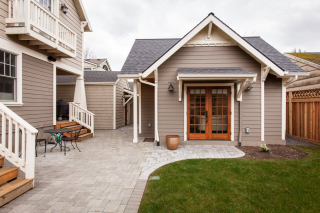
Older adults relocating to be closer to relatives, may soon have another alternative: a "granny pod" or micro-house. These small homes are designed for accessibility, but are compact enough to fit in a backyard.

Contact Information