Articles Posted in Trusts

Things to do ListHis Will was written before the birth of his last two children and never updated; thus, his estate plan is completely silent about his wishes for them. The actor's death also highlights the effect that marriage can have on an estate plan.

It seems that once a high-profile celebrity passes away, news of their estate floods the media shortly after. A recent article in The National Review, titled "A Hollywood Lesson for Everyday People: Trusts," emphasizes how one of the biggest misfortunes in the passing of actor Phillip Seymour Hoffman is that everyone now knows his business. We all know what assets were left to whom, who was left out, and how much money he had. These are typically private concerns, but because Hoffman only had a will, which is publicly probated in open court, everyone has access to these public records. Fortunately, there is a simple way for people to keep their estate plans from becoming blog material (like this!): create a trust.

A revocable living trust is a common type of trust that can help secure your privacy. According to the original article, Hoffman said he did not want his kids to be "trust fund kids." This meant he did not want his kids to be spoiled by his acting fortune. However, his definition of a trust could have used some better intel. Hoffman's children actually would have been better off with a trust that set out specific distributions tied to some conditions or events, such as their 25th birthdays or to use for college tuition.

Dogs whisperIf there is a boogeyman when it comes to family conversations about inheritance, it is not death. It’s the $40 trillion that financial advisers say their baby boomer clients are going to pass to their children either in an orderly way — or in a chaotic mess. A report by UBS on why families should talk about inheritance confirms the reluctance of people to talk about death and money.

Remarkably, a recent New York Times article, titled "What’s Almost as Certain as Death? Not Talking About the Inheritance," noted that it is easier to have a will (83% do) than it is to discuss the will with your children (only half). It is even more difficult to give them details about those assets (34%).

Regardless their levels of financial wealth, those surveyed were equally deficient when it comes to discussing estate plans with their children. Roughly 55% of people with more than $1 million talk to their children about an inheritance, and 53% of people with fewer than $1 million did. As you might expect, the majority of parents want the transfer of money to their children to go smoothly (84%) without creating bad feelings among siblings (66%).

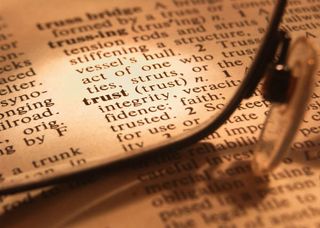
Trust definitionEvery so often, a client will come in and announce that he or she needs a revocable trust. Typically the request stems from something the client has read in a book or article, or perhaps advice from a neighbor or friend. Of course, not everyone needs a revocable trust … 

As revocable living trusts continue in popularity, many first-timers think that is the solution to their estate planning needs. Usually a friend or family member who has a trust will suggest it, or they may have read articles online suggesting everyone needs to have a revocable living trust. Being new to the estate planning world, they assume this is something they need too. The truth is that revocable living trusts are designed for particular estate planning situations. They are not necessary in every situation.

A recent article in Financial Planning titled “Does Your Client Need a Revocable Trust?considered common situations that might call for a revocable living trust. The list includes:

Stack of law booksToday’s low interest rates create special problems for those focused on income, including retirees and the income beneficiaries of trusts.

Prolonged periods of low interest rates can result in low trust income, creating conflict among beneficiaries. Many trusts are set up in a way that creates two different groups of beneficiaries. The first group are income beneficiaries who have a right to the current income the trust property generates. Another group are remainder beneficiaries. They get what is left in the trust when the trust ends. Income beneficiaries naturally want the income maximized and remainder beneficiaries want the principal maximized.

As Forbespoints out, in an article titled With Interest Rates Low, Here's How To Boost Income From A Trust, low interest rates make it difficult for trustees to keep both groups happy. There simply are not enough good investment vehicles available to keep both groups of beneficiaries happy in low interest rate environments. The solution is known as the power to adjust. This allows trustees to reclassify trust assets. Forbes has an example of how it can work: “By utilizing the power to adjust, trustees are able to invest in the best total return portfolio without regard to the amount of income it generates; so, for example, in the current low-rate climate, this may result in a portfolio that is primarily equity.  The power to adjust allows the trustee to take a certain amount of principal, reclassify the assets as income, and distribute the assets to the income beneficiary.”

Money treeWho knew a “Walk on the Wild Side” could pay off so handsomely? Late rock legend Lou Reed left behind a $30 million fortune, The Post has learned. $20 million-plus in “money and other property” doesn’t include the approximately $10 million in gifts Reed left to his wife, sister and mother in his will. It also doesn’t include life insurance or retirement accounts. The funds are likely from Reed’s copyright and publishing interests …

Everyone probably knows some of the late Lou Reed's songs, such as “Walk on the Wild Side” and “Sweet Jane.” Even though Lou Reed was already a rock and roll legend, he had never had a true number one hit. The songs were not even in the top 10 in the United States. This left Reed with approximately $10 million in assets at the time of his death.

Reed's manager recently filed papers in court that he had already garnered another $20 million in assets for Reed's estate. The New York Post recently reported on how the money was likely earned. The article is titled Lou Reed left behind $30 million fortune.”

Bulldog readingAs with estate planning for humans, creating a pet trust is designed to give owners peace of mind. To ensure that pets will be cared for in accordance with an owner’s wishes, owners should be sure to definitively detail their pet’s standard of living and nutritional and health care.

Although pets are a beloved part of one's family, in the eyes of the law they are merely viewed as another form of property. This can make planning for the care of your pet difficult after you’re gone. While you can’t leave an inheritance to a pet, when including a “pet trust” as part of your estate plan you can provide for their care when you’re not there to provide it yourself.

“Pet trusts” have a decidedly less serious ring about them than a “Grantor Retained Annuity Trust.” Legal jargon aside, pet trusts can be plenty useful little devices for a common problem, especially amongst elderly pet lovers. In fact, a recent article in the Millionaire Corner considers a pet trust an estate planning basic. The article, titled  Estate Planning Basics: Creating a Pet Trust,” offers some practical pointers to consider.

Money with watchEstate freezing, under the right circumstances, can become a vital component of an intelligent wealth preservation strategy.

A “frozen asset” can be viewed as an investment that refuses to move with the market. Fewer things are more annoying to a savvy investor! If an investment isn't growing, what is the point?

No, Gordon Gekko is not the only one to see it this way, either. Then again, if you are not investing in growth, but in your family and a powerful estate plan, there are some times when capping or transferring growth and, yes, even “freezing” assets is a definite boon.

Puppy"Pet trusts aren't just for the wealthy," says Frances Carlisle, a trust and estates attorney in New York. For most pet owners, she adds, the goal "is to make sure a plan exists for the care of the animal."

Do you own a pet? It seems as though more and more people are taking in pets these days. In fact, from 2010 to 2012, the number of pet-owning households increased from 62% to 68%. Consequently, more pet owners are taking their beloved pets into consideration when it comes to their estate plans.

Maybe you have heard the term “pet trust” before. Even if you have, The Wall Street Journal has provided the latest information on planning for your pet and some noteworthy statistics in a recent article titled “More Americans Are Writing Their Pets Into Their Wills.

MP900400665… Make sure that you understand what is in your trust. Other issues, particularly those related to tax issues, will require consulting with an estate planning professional.

Do you have a trust? Trusts are powerful estate planning tools, those of which should be properly established and properly maintained. When it comes to revocable trusts, also known as “living” trusts, ElderLawAnswers offers a convenient and instructive checklist of the things to watch and the things that can go wrong in an article titled “9 (Potential) Problems with Your Trust.

These nine (potential) problems reside in these questions:

Contact Information